
Yes, Salt Lake City is a good place to live in 2026 for most renters, especially if you value outdoor access, a strong job market, and relatively low taxes. The city offers a 3.6% unemployment rate that matches the national average, a flat 4.45% state income tax, and world-class skiing within about 45 minutes of downtown. The trade-offs are real, though: housing costs run about 20% above the national average, and winter air quality can be a genuine problem for weeks at a time. Whether Salt Lake City is the right fit for you comes down to how much you value the outdoor lifestyle and job opportunities against the higher cost of housing and winter inversions.
Below, we break down the cost of living, job market, weather, safety, schools, and getting around, so you can decide for yourself whether Salt Lake City is a good fit in 2026.
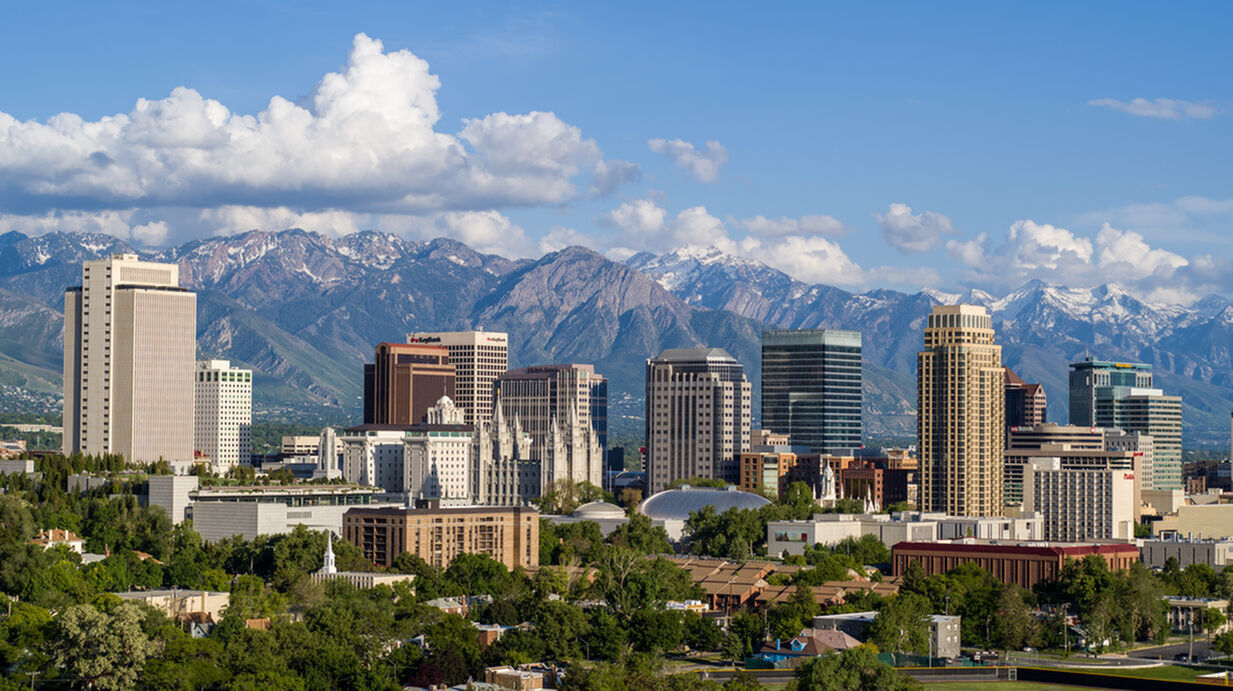
What Is Salt Lake City Known For?
Salt Lake City is the capital of Utah and the state’s largest city, with a 2026 population of about 222,706 and roughly 1.2 million people in the broader metro area. It’s known for its setting at the base of the Wasatch Mountains, its proximity to the Great Salt Lake, Temple Square and the headquarters of The Church of Jesus Christ of Latter-day Saints, and a growing tech corridor nicknamed “Silicon Slopes.” The city has grown by nearly 11% since the 2020 census, driven largely by its combination of job opportunities and outdoor access.
Salt Lake City at a Glance
| Category | 2026 Figure |
|---|---|
| Population (city) | ~222,706 |
| Unemployment rate | 3.6% |
| State income tax | Flat 4.45% |
| Average combined sales tax | ~7.19% |
| Average apartment rent (citywide) | ~$1,602/month |
| Median home sale price | ~$608,669 |
| Ski resorts within ~45 minutes | Alta, Snowbird, Brighton, Solitude |
How Much Does It Cost to Live in Salt Lake City in 2026?
Overall, the cost of living in Salt Lake City runs about 5% higher than the national average, driven almost entirely by housing. Groceries, utilities, and healthcare all come in at or below the national average, which helps offset the higher cost of rent and home prices.
Housing Costs and Rent Trends
Housing in Salt Lake City runs about 20% above the national average. Citywide, average rent breaks down to roughly $1,138 for a studio, $1,434 for a one-bedroom, $1,816 for a two-bedroom, and $2,132 for a three-bedroom, according to RentCafe. On the ownership side, the median home sale price is about $608,669, up 3.5% year over year, and homes are selling in about 29 days in what Redfin describes as a “very competitive” market.
Groceries, Utilities, and Everyday Expenses
Groceries in Salt Lake City run about 2% below the national average, and utilities come in roughly 16% cheaper, with average monthly energy costs around $163. Healthcare costs are also about 7% below the national average. The median household income in the area is around $75,000, which provides useful context for how far a typical paycheck goes against these costs.
Utah’s Tax Rates Compared to Other States
Utah keeps taxes relatively simple and low. The state has a flat 4.45% individual income tax rate (with no separate local income tax), a combined state and local sales tax rate that averages about 7.19%, and one of the lower effective property tax rates in the country at roughly 0.48% on owner-occupied homes. For renters, property tax isn’t a direct concern, but it does factor into the overall cost picture landlords build into rent.
What Is the Job Market Like in Salt Lake City?
Salt Lake City’s job market has stayed resilient into 2026. The metro area added about 22,900 jobs over the past year, and unemployment sat at 3.6% in June 2026, matching the national rate and outperforming roughly 70% of surveyed U.S. metro areas.
Major Industries and Employers
The local economy is anchored by healthcare, higher education, technology, and finance. Salt Lake City is the hub of Utah’s “Silicon Slopes” tech corridor, home to a growing number of software and tech companies, alongside major healthcare systems and the University of Utah, one of the region’s largest employers. For a deeper look at specific employers and how to find work locally, see our Salt Lake City jobs guide.
Unemployment Rate and Job Growth
A 3.6% unemployment rate is generally considered close to full employment, and steady year-over-year job growth suggests the local economy isn’t just holding steady but still expanding. That said, a strong job market doesn’t automatically mean an easier budget, since wage growth hasn’t always kept pace with rising housing costs.
What Is the Weather Like in Salt Lake City?
Salt Lake City has four distinct seasons, which is part of the appeal for people who want real variety throughout the year rather than the same climate every month.
Four Distinct Seasons
Summers are hot and dry, often reaching the 90s, while winters are cold with regular snowfall, especially in the nearby mountains. Spring and fall are mild and considered by many locals to be the most pleasant times of year, with comfortable temperatures for hiking and being outside.
The Winter Air Quality Challenge
This is the most important honest drawback to know about. Salt Lake City’s location in a mountain valley makes it prone to winter temperature inversions, where cold air gets trapped under a layer of warmer air, acting like a lid that traps pollution close to the ground. During inversion events, the city has ranked among the worst in the nation for air quality, and particulate pollution can double day over day until a storm clears the air. If air quality is a health concern for you or your family, it’s worth researching current conditions and knowing that the city runs programs like “Idle Free SLC” and “Clean Air SLC” aimed at reducing the problem.
Is Salt Lake City Good for Outdoor Recreation?
For outdoor lovers, this is where Salt Lake City genuinely stands out compared to most U.S. cities its size.
World-Class Skiing Minutes From Downtown
Alta, Snowbird, Brighton, and Solitude are all within about 45 minutes of downtown Salt Lake City, with additional resorts in nearby Park City, Provo Canyon, and Ogden. Some of these resorts are even accessible by UTA public transit, which means a serious ski day doesn’t necessarily require a car.
Hiking, Biking, and the Great Salt Lake
Beyond skiing, the Wasatch Mountains offer extensive hiking and mountain biking trails accessible right from the edge of the city, and the Great Salt Lake and nearby canyons add even more options for people who want to spend weekends outside. This access is a major reason people choose to live in Salt Lake City over other cities with a comparable cost of living.
Is Salt Lake City Safe?
Utah as a whole reports a violent crime rate of 2.57 incidents per 1,000 people, well below the national average of 4.43, and a property crime rate of 16.36 per 1,000 people, also below the national average of 22.89. As with any city, safety varies significantly by neighborhood, so it’s worth researching crime data for the specific area you’re considering rather than relying on citywide or statewide averages alone.
What Are the Schools and Universities Like in Salt Lake City?
Salt Lake City is home to the University of Utah, the state’s flagship public research university, along with several other colleges and universities in the surrounding metro area. For families with school-age children, school quality varies by neighborhood and district, so it’s worth researching specific schools directly. For more on this, see our guide to education in Salt Lake City.
Is Salt Lake City Easy to Get Around Without a Car?
Salt Lake City ranks better than many similarly sized U.S. cities for public transit, coming in at No. 22 nationally for transit use.
Public Transit and Walkability
The TRAX light rail system and FrontRunner regional rail connect much of the metro area, and several neighborhoods, including Central Ninth, are considered walkable and bike-friendly. That said, a car still makes life easier for reaching the mountains, suburbs, and areas outside the main transit lines. For a full breakdown of your options, see our guide to commuting in Salt Lake City.
The Airport and Getting Out of Town
Salt Lake City International Airport is directly connected to downtown via the TRAX Green Line, making it one of the more convenient major airports to reach without driving. This is a meaningful perk for frequent travelers and one of the reasons Salt Lake City works well as a home base.
What Are the Pros and Cons of Living in Salt Lake City in 2026?
| Pros | Cons |
|---|---|
| Strong, resilient job market (3.6% unemployment) | Housing costs about 20% above the national average |
| Flat, relatively low 4.45% state income tax | Winter temperature inversions hurt air quality |
| World-class skiing within ~45 minutes of downtown | Home prices rising (up 3.5% year over year) |
| Below-average grocery, utility, and healthcare costs | Competitive housing market with fast-moving inventory |
| Growing tech and healthcare job sectors | Car still useful outside walkable neighborhoods |
| Below-average violent and property crime rates statewide | Summer ozone and wildfire smoke can also affect air quality |
| Direct airport access via TRAX light rail |
Is Salt Lake City a Good Place to Live in 2026?
For most renters, yes. Salt Lake City works especially well if you value access to outdoor recreation, a resilient job market, and comparatively low taxes, and you’re willing to budget for housing costs that run above the national average. It tends to be a better fit for people who plan to spend real time outside, whether that’s skiing 45 minutes from home or hiking right at the edge of the city, than for people whose top priority is the lowest possible cost of living. Winter air quality is the one factor worth taking seriously before you commit, especially if you or a family member has respiratory sensitivities.
Where Should You Live in Salt Lake City?
Once you’ve decided Salt Lake City is the right city, the next question is which part of it. Walkable, amenity-rich neighborhoods like Central Ninth offer a strong mix of local restaurants, coffee shops, and community character, while other pockets of the city lean more residential and quiet. If space, privacy, and a private garage matter to you, it’s also worth comparing townhomes and apartments before you decide what type of home fits your lifestyle.
Gabbott’s Row offers spacious 2- to 3-bedroom townhomes for rent in Salt Lake City, with an attached two-car garage and a private entrance in every home, giving you easy access to the city’s job market and outdoor recreation without giving up space or privacy. See the neighborhood for yourself to get a feel for what’s nearby.
Ready to see it for yourself? Explore floor plans or schedule a tour at Gabbott’s Row today.
Frequently Asked Questions
Is Salt Lake City a good place to live in 2026?
Yes, for most renters. Salt Lake City offers a strong job market, low taxes, and easy access to outdoor recreation, though housing costs run above the national average and winter air quality is a real drawback to plan around.
Is Salt Lake City expensive to live in?
Somewhat. The overall cost of living is about 5% above the national average, driven mainly by housing, which runs about 20% higher than the national average. Groceries, utilities, and healthcare all cost at or below the national average, which helps balance things out.
What is Salt Lake City known for?
Salt Lake City is known for its setting at the base of the Wasatch Mountains, its proximity to the Great Salt Lake, Temple Square, and a growing tech corridor known as Silicon Slopes, along with easy access to some of the best skiing in the country.
Is Salt Lake City safe?
Utah’s statewide violent and property crime rates are both below the national average, but safety varies by neighborhood, so it’s worth researching crime data for the specific area you’re considering.
Does Salt Lake City have bad air quality?
At times, yes. Winter temperature inversions can trap pollution in the valley and lead to some of the worst air quality days in the country, though conditions improve once storms clear the inversion. Summer ozone and wildfire smoke can also affect air quality at certain points in the year.
What is the job market like in Salt Lake City?
Strong. Salt Lake City’s unemployment rate was 3.6% in June 2026, matching the national average, and the metro area added about 22,900 jobs over the past year, with healthcare, technology, and higher education among the leading industries.
Is Salt Lake City good for outdoor activities?
Yes. Alta, Snowbird, Brighton, and Solitude ski resorts are all within about 45 minutes of downtown, and the Wasatch Mountains offer extensive hiking and mountain biking access right at the edge of the city.
Do I need a car in Salt Lake City?
Not always. Salt Lake City ranks No. 22 nationally for transit use, with TRAX light rail and FrontRunner regional rail connecting much of the metro area, and several neighborhoods are walkable and bike-friendly. A car still makes it easier to reach the mountains and areas outside the main transit lines.
What’s a good neighborhood to live in Salt Lake City?
It depends on your priorities. Walkable neighborhoods like Central Ninth offer a strong mix of local restaurants and coffee shops, while other areas of the city are quieter and more residential. Comparing specific communities, like the townhomes at Gabbott’s Row, is a good next step once you’ve settled on a general area.