For most people in today’s market, renting is the more affordable and flexible choice in Salt Lake City. As of late 2025 data, buying a typical home here requires roughly double the annual income needed to rent a typical apartment, plus a large upfront down payment and closing costs that renting simply doesn’t require. Buying can still make sense if you plan to stay in one place for seven or more years and want to build long-term equity, but for anyone prioritizing flexibility, lower upfront costs, or simply getting settled without a six-figure down payment, renting is currently the more practical path in Salt Lake City.
Below, we break down the real monthly and upfront costs of each option, the honest pros and cons, and how to decide which one fits your situation in 2026.
How Do Monthly Costs Compare: Renting vs. Buying in Salt Lake City?
The clearest way to compare renting and buying is to look at the actual monthly numbers side by side.
| Cost Factor | Renting (Average 2BR) | Buying (Median Home, 20% Down) |
|---|---|---|
| Monthly payment | ~$1,816/month | ~$3,145/month (principal & interest) |
| Property tax | Not applicable | ~$243/month |
| Homeowners/renters insurance | Included in most rental budgets | ~$178/month (est.) |
| Estimated total monthly cost | ~$1,816/month | ~$3,566/month |
| Upfront cost to move in | First month’s rent + deposit | ~$121,734 down payment + $12,000–$30,000 closing costs |
*Buying estimate is based on a $608,669 median Salt Lake City home price, a 20% down payment, and a 6.71% 30-year fixed mortgage rate (Bankrate, August 2026), plus Utah’s average 0.48% effective property tax rate and an estimated insurance cost. It excludes HOA fees, PMI, and maintenance, which would push ownership costs even higher for many buyers.
Even before accounting for maintenance, HOA fees, or a smaller down payment (which would add mortgage insurance), owning a median-priced home in Salt Lake City costs roughly double what renting a comparable two-bedroom does per month.
Is It Cheaper to Rent or Buy in Salt Lake City Right Now?
Renting, by a wide margin. According to a 2026 Stacker analysis of Salt Lake City housing data, buying a typical home here requires an annual income of about $137,568, compared to just $63,994 to rent a typical apartment. That’s a 115% income premium to buy versus rent, well above the 46.3% national average premium. In other words, Salt Lake City’s gap between renting and buying affordability is currently more than double the typical U.S. city. If you’re curious what that income actually looks like locally, our Salt Lake City jobs guide breaks down typical salaries by industry.
What Are the Upfront Costs of Buying a Home in Salt Lake City?
Beyond the monthly payment, buying a home comes with significant cash requirements before you ever get the keys.
- Down payment: A traditional 20% down payment on a $608,669 home comes to roughly $121,734. Buyers who put down less than 20% can qualify with as little as 5%, but will pay for private mortgage insurance (PMI) until they build enough equity.
- Closing costs: Utah closing costs typically run 2% to 5% of the purchase price, or roughly $12,000 to $30,000 on a median-priced home, on top of the down payment.
- Ongoing costs: Property taxes, homeowners insurance, maintenance, and potential HOA fees all add up after move-in, and none of these apply to renters.
Renting, by comparison, typically requires first month’s rent and a security deposit, a small fraction of what buying requires upfront.
What Are the Benefits of Renting in Salt Lake City?
Lower Upfront and Monthly Costs
Renting avoids the down payment, closing costs, and higher monthly payments that come with buying at today’s mortgage rates, which frees up cash for other priorities.
Flexibility to Move
A lease typically runs 12 months, which makes it far easier to relocate for a new job, a life change, or simply to try a different neighborhood without the time and cost of selling a home.
No Maintenance or Repair Costs
When an appliance breaks or the roof needs work, it’s the property’s responsibility, not yours. That predictability makes budgeting simpler and removes a major source of surprise expenses.
Access to Amenities Without the Investment
Many rental communities, including Gabbott’s Row, include amenities like garages, outdoor spaces, and community features that would cost significantly more to add to a purchased home.
What Are the Drawbacks of Buying a Home in Salt Lake City Right Now?
Mortgage Rates Are Still Elevated
At a 6.71% average 30-year fixed rate, monthly payments on a typical Salt Lake City home run significantly higher than they did just a few years ago, which is a major factor behind the widening gap between renting and buying costs.
The Market Remains Competitive
Redfin describes Salt Lake City as a “very competitive” market, with homes selling in about 29 days and roughly 30.8% of homes selling above asking price, which can mean bidding wars and waived contingencies for buyers.
Your Money Is Tied Up and Harder to Access
A down payment and home equity aren’t easily accessible the way savings are, and selling a home to free up that money takes months and comes with its own closing costs.
You Absorb Every Repair and Maintenance Cost
From a failed water heater to roof repairs, homeowners are responsible for the full cost of upkeep, which can run thousands of dollars in a single year.
Are There Any Advantages to Buying in Salt Lake City?
To be fair, buying isn’t the wrong choice for everyone. A fixed-rate mortgage payment stays the same over time while rent can rise with each lease renewal, and every mortgage payment builds equity instead of going to a landlord. For someone planning to stay in Salt Lake City for seven or more years, with a stable income and enough saved for a strong down payment, buying can still make long-term financial sense, especially if home values continue to appreciate as they have recently. The math simply favors renting for most people in the current market, particularly anyone who isn’t certain they’ll stay put for several years.
Which Lifestyle Fits Renting vs Buying Best?
People New to Salt Lake City or Uncertain About Staying Long-Term
If you’re relocating for a job or just testing out the city, renting lets you get to know different neighborhoods, like Central Ninth or areas near Gabbott’s Row, before committing to one long-term. If you’re still weighing whether Salt Lake City itself is the right move, our full guide on what it’s like to live in Salt Lake City in 2026 is a good place to start.
Renters Prioritizing Cash Flow and Flexibility
If freeing up monthly cash flow or avoiding a large upfront investment matters more than building home equity right now, renting is the clearer fit.
Buyers With a Long Time Horizon and Strong Savings
If you have a substantial down payment saved, stable long-term plans in Salt Lake City, and want to build equity over a decade or more, buying may still make sense despite the higher upfront and monthly costs.
How Do You Decide Between Renting and Buying in Salt Lake City?
Ask yourself these questions before deciding:
- How long do I plan to stay in Salt Lake City? Renting makes more sense under about five to seven years; buying starts to pay off more over longer time horizons.
- Do I have 20% saved, or am I comfortable paying PMI? A smaller down payment adds meaningfully to your monthly costs.
- How would I handle an unexpected $5,000 repair? If that would strain your finances, renting removes that risk entirely.
- Is my income or job situation likely to change soon? Flexibility matters more if there’s real uncertainty ahead.
- What’s my true monthly budget, all costs included? Compare full ownership costs, taxes, insurance, and maintenance, not just the mortgage payment, against all-inclusive rent.
Why Does Renting at Gabbott’s Row Make Sense in Today’s Market?
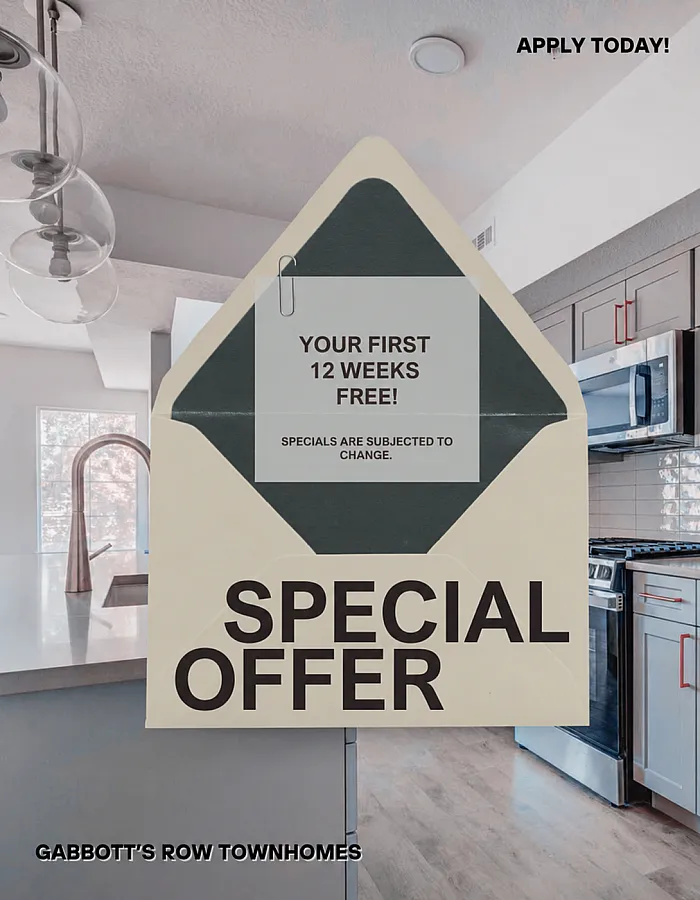
Given how wide the affordability gap has grown between renting and buying in Salt Lake City, renting a well-designed home is one of the most practical ways to get the space and lifestyle you want without the six-figure upfront cost of buying. Gabbott’s Row offers spacious 2- to 3-bedroom townhomes for rent, each with an attached two-car garage, a private entrance, and modern finishes, giving you a home that feels like ownership without the mortgage, taxes, or maintenance bills. If you’re also weighing a townhome against an apartment, that comparison is worth reading alongside this one.
Ready to see what renting a townhome in Salt Lake City looks like? Explore floor plans or schedule a tour at Gabbott’s Row today.
Frequently Asked Questions
Is it cheaper to rent or buy in Salt Lake City?
Renting is currently significantly cheaper. Buying a typical home in Salt Lake City requires about double the annual income needed to rent, according to a 2026 analysis, largely due to elevated mortgage rates and rising home prices.
How much do I need to make to buy a house in Salt Lake City?
Recent data puts the income needed to afford a typical Salt Lake City home at around $137,568 per year, compared to about $63,994 to afford a typical rental.
What is the average mortgage payment in Salt Lake City?
On a median-priced home of about $608,669 with 20% down at a 6.71% interest rate, the estimated principal and interest payment alone runs around $3,145 per month, before taxes, insurance, and maintenance.
How much do I need for a down payment in Salt Lake City?
A traditional 20% down payment on a median-priced Salt Lake City home comes to roughly $121,734. Buyers can put down less, sometimes as little as 5%, but will pay for private mortgage insurance until they build enough equity.
Is renting a waste of money compared to buying?
Not necessarily. While renting doesn’t build equity, it also avoids the down payment, closing costs, mortgage interest, property taxes, and maintenance expenses that come with owning, all of which add up to real money that renters can save or invest elsewhere.
How long should I plan to stay before buying makes more sense than renting?
Most financial guidance suggests buying starts to make more sense if you plan to stay in one place for at least five to seven years, since that gives you more time to recoup closing costs and benefit from home appreciation.
Are there benefits to buying a home in Salt Lake City despite the higher cost?
Yes. A fixed-rate mortgage payment doesn’t rise the way rent can, and every payment builds equity instead of going to a landlord, which can pay off for buyers with a long-term plan to stay in the area.
This article is for general informational purposes only and isn’t financial, legal, or lending advice. Mortgage rates, home prices, and rental averages shift often, so treat the figures below as a snapshot rather than a quote, and talk with a licensed lender or financial advisor before making a decision based on your own finances